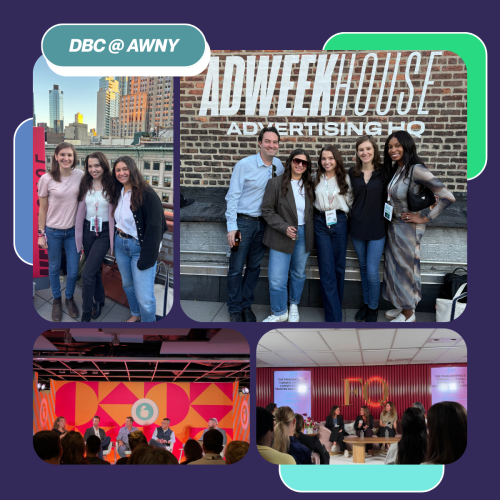
Another Advertising Week New York (AWNY) is in the books, leaving the DBC team with plenty to unpack after four days of panels, get-togethers and conversations.
While the annual event always offers a snapshot of where marketing is headed, this year’s underlying theme was clear: as tech accelerates, the human element–from how we leverage AI to how we partner with creators–remains the industry’s biggest differentiator. From shifts driving real value to the trends causing collective fatigue, DBC’s Abby Centanni, Alex Bacharach, Sarah Main and Taylor Sansum sat down to share their takes on what was hot and what was not from AWNY 2026.
What’s Hot
Human Touch & Critical Thinking Over Pure Automation
AI may be everywhere, but the industry is actively pushing back against using technology as a complete substitute for human judgment. The real value now lies in knowing what to ask and retaining critical oversight as workflows become automated. As feeds fill up with algorithmic content, human intuition, discernment, and creative direction are what keep campaigns grounded and effective.
Creators as Genuine Creative Partners
Creator-led sessions took center stage, reinforcing that the creator economy is no longer just about transactional paid placements. Audiences are increasingly skeptical of online content, making authenticity essential. Brands see the biggest payoff when they involve creators early in the strategic process, giving them true creative control to leverage their distinct voices rather than forcing rigid brand guidelines.
Bold Opinions & “Being a Little Weird”
With AI making content production faster and cheaper, it also threatens to make everything look and sound identical. The remedy? Distinct perspectives and calculated creative risks. Executives who share hot takes, embrace fandoms, and lean into brand personality are standing out. In a landscape where tech levels the playing field, genuine interest and bold creative choices are the hardest commodities to buy.
What’s Not
AI Fatigue & Over-Complication
Nearly every session seemed obligated to slap “AI” into its title or work it into the discussion, leading to noticeable audience fatigue. Advertisers don’t need another complex system to manage, nor do they need repetitive, high-level buzzwords. The consensus was clear: stop talking about AI for the sake of it, stop adding software clutter, and start focusing on concrete business outcomes and simplified workflows.
Sponsorship as a Stand-In for Strategy
Simply buying a spot on a panel, handing out swag, or sponsoring a stage doesn’t automatically confer thought leadership. Attendees are increasingly weary of safe, recycled predictions and pay-to-play presence. Without a unique perspective or a willingness to engage in real debate, standard event presence yields little long-term value.
The Conference Echo Chamber
When industry panels repeatedly feature the same talking points without challenging the status quo, even the biggest stages lose their impact. Moving forward, the value of events like AWNY will depend on fostering genuine debate, showcasing opposing viewpoints, and tackling real operational challenges rather than repeating safe predictions.